


Introduction
Microbes are microscopic organisms that cannot be seen with the naked eye. To study their structure, behaviour, and characteristics, they must first be cultured and isolated using appropriate growth media.Among the most fundamental microbiology techniques are streak plating, stab culture, and spread plating. Each method serves a unique purpose and equally important is the choice of consumables used to execute them with precision. In this blog, we’ll explore these core techniques alongside ABDOS consumables engineered for reliability and consistency, helping you choose the right tool for your workflow.
Method 1: The Streak Plate Method
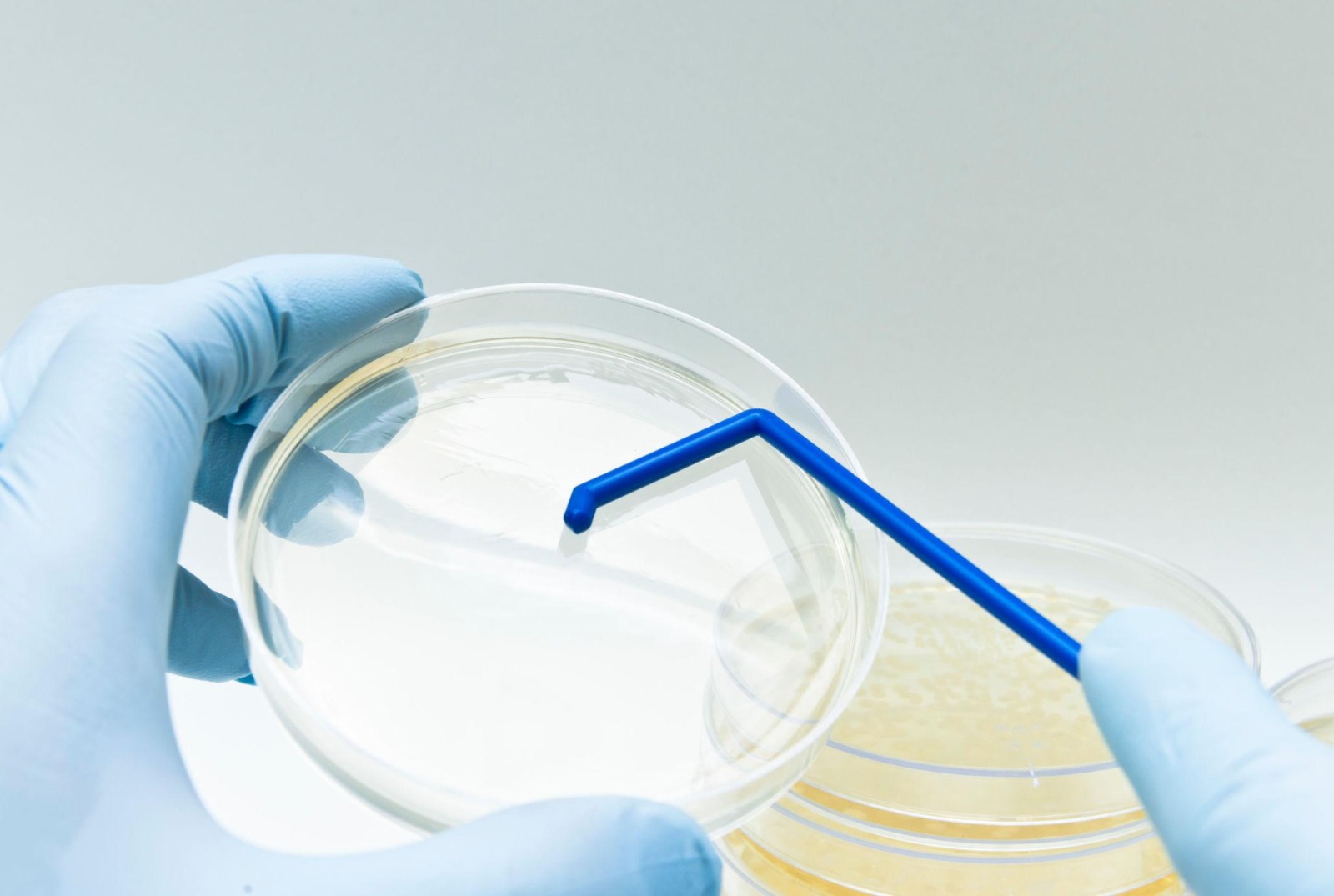
The streak plate method is one of the most widely used techniques to isolate a pure culture from a mixed microbial sample. It works on the principle of mechanical dilution, where the inoculum is progressively spread across an agar surface to obtain well-isolated colonies.
Types of Streaking Techniques: Depending on the pattern and application, streaking can be performed in several ways:
- Quadrant Streaking – Divides the plate into four zones for progressive dilution
- T-Streaking – Uses three sections for controlled spreading
- Continuous Streaking – Single uninterrupted motion, ideal for already dilute samples
- Radiant Streaking – Vertical streaks followed by diagonal cross-streaking
- Semi-quantitative Streaking – Uses calibrated loops (1 µl or 2 µl) for volume accuracy
- Zigzag Streaking – Single motion pattern for even distribution
ABDOS Soft Inoculation Loops (HIPS): To achieve consistent results, the streaking tool must ensure smooth movement and precise inoculum transfer.
Key Features:
- Smooth surface for uniform streaking without agar damage
- Polygonal shaft for improved grip and orientation
- Available in 1 µl (white) and 10 µl (blue) for easy identification
- 200 mm length enables natural wrist control
- Option for loop + integrated needle (dual functionality)
- Sterility assurance (SAL 10⁻⁶, ISO 11137 compliant)
| Sample Type | Recommended Loop |
| Dense or highly contaminated samples | 1 µl (better dilution) |
| Dilute or pre-cultured samples | 10 µl (ensures colony reach) |
| Unknown concentration | Start with 1 µl, then adjust |
ABDOS Duo Loop (HIPS): A double-ended loop (1 µl + 10 µl) in a single shaft that would eliminate tool switching; reduces handling errors; Maintains consistent performance across both ends
Method 2: Stab Culture: Stab culture involves inserting a straight needle into semi-solid or deep agar. It is primarily used for Motility testing, Long-term culture preservation and Biochemical identification tests. This method requires precision and minimal disturbance of the medium.
ABDOS Loop with Incorporated Needle: ABDOS combines streaking and stabbing functions in one tool:
- Straight, rigid needle for accurate stab entry
- Clean withdrawal without disrupting the agar
- Available in 1 µl and 10 µl loop variants
For combined workflows:
- Use the loop end for surface streaking
- Use the needle end for stab culture
This improves efficiency and reduces instrument handling.
Method 3: Spread Plate Method: The spread plate method involves distributing a known volume of microbial suspension evenly across an agar plate.Unlike streaking (qualitative), spread plating is quantitative, making it ideal for:
- Colony Forming Unit (CFU) counting
- Food safety testing
- Antibiotic assays
- Total plate count analysis
ABDOS Cell Spreaders: ABDOS cell spreaders are designed for even distribution without damaging agar surfaces.
Key Features
- Non-gouging blade geometry
- Smooth spreading across full surface
- Rigid handles for controlled pressure
Selecting the Right Spreader Shape
| Shape | Ideal Use |
| Triangle (PP) | Standard CFU counting |
| T-Shaped (HIPS) | Even coverage using Drigalski method |
| L-Shaped (HIPS) | Angled spreading, push-based technique |
Understanding Shape Differences
- Triangle Spreaders: Sweep liquid outward from the centre
- T-Shaped Spreaders: Provide linear pressure and uniform spreading
- L-Shaped Spreaders: Allow angled application with pushing motion
Conclusion: To conclude whether you’re performing routine microbial isolation or working within a regulated GMP environment, the reliability of your results depends heavily on the tools you use.Explore the complete ABDOS Microbiology range at www.abdoslifesciences.com Or connect with us to find the right tools tailored to your workflow.
FAQ (Frequently Asked Questions)
1.What are the most common microbial culturing techniques?
The three most widely used techniques are:
- Streak Plate Method – for isolating pure cultures
- Spread Plate Method – for quantitative colony counting (CFU)
- Stab Culture – for motility testing and culture preservation
2.What is the difference between streaking and spread plating?
- Streaking is a qualitative method used to isolate individual colonies from a mixed sample
- Spread plating is a quantitative method used to evenly distribute a known volume of sample for accurate colony counting
3. What is a pure culture and why is it important?
A pure culture contains only one type of microorganism. It is essential for:
- Accurate identification
- Biochemical testing
- Research and industrial applications
4. What is the difference between calibrated and non-calibrated loops?
- Calibrated loops deliver a fixed volume (e.g., 1 µl or 10 µl) and are used in quantitative applications
- Non-calibrated loops are used for general culturing where volume accuracy is not critical