



Parkinson’s Disease (PD) is a dynamic neurodegenerative condition that majorly affects movement and gradually impacts everyday life. PD occurs when the dopamine-producing neurons start dying within the substantia nigra. The substantia nigra is a portion of the brain responsible for all movement control in the body; as the dopamine level reduces, communication between cells gets to be disturbed, causing major symptoms such as tremors, slowed movement (bradykinesia), rigidity, and postural instability. A significant number of patients also encounter other non-motor problems that include declination of cognitive ability, disturbance of sleep, and autonomic dysfunction, a condition in which the nervous system does not function properly.
Therapeutic drugs such as levodopa, COMT inhibitors and MAO-B inhibitors, dopamine agonists are commonly prescribed to dealing with the Parkinson’s. These drugs only help in the managing of symptoms but not completely cure the disease, and at present there is no treatment for this disease. Patients, who are taking these drugs from longer period have faced problems like dyskinesia, hallucinations, bad sleep, cognitive disability and unstable drug response. When medications no longer provide consistent relief, many patients opt for the surgical alternatives such as deep brain stimulation (DBS). These surgical alternatives do not stop the progression of the disease and show adverse side effects.
Nanocarrriers & Nanotechnology in Parkinson’s Disease
The major obstacle in treating the Parkinson’s using therapeutic drugs is Blood brain barrier (BBB). The BBB is outermost protective wall around the brain which protects the brain from entering the harmful substances into the brain. It also hinders the entry of therapeutic drugs into the brain. This is the main reason insufficient drugs reach to the brain cells and affects the efficacy of treatments. Furthermore, traditional treatment methods involve frequent doses of drugs given to the patients, ultimately driving to systemic side effects. Researcher are developing other targeted therapeutic strategies to overcome these limitations.
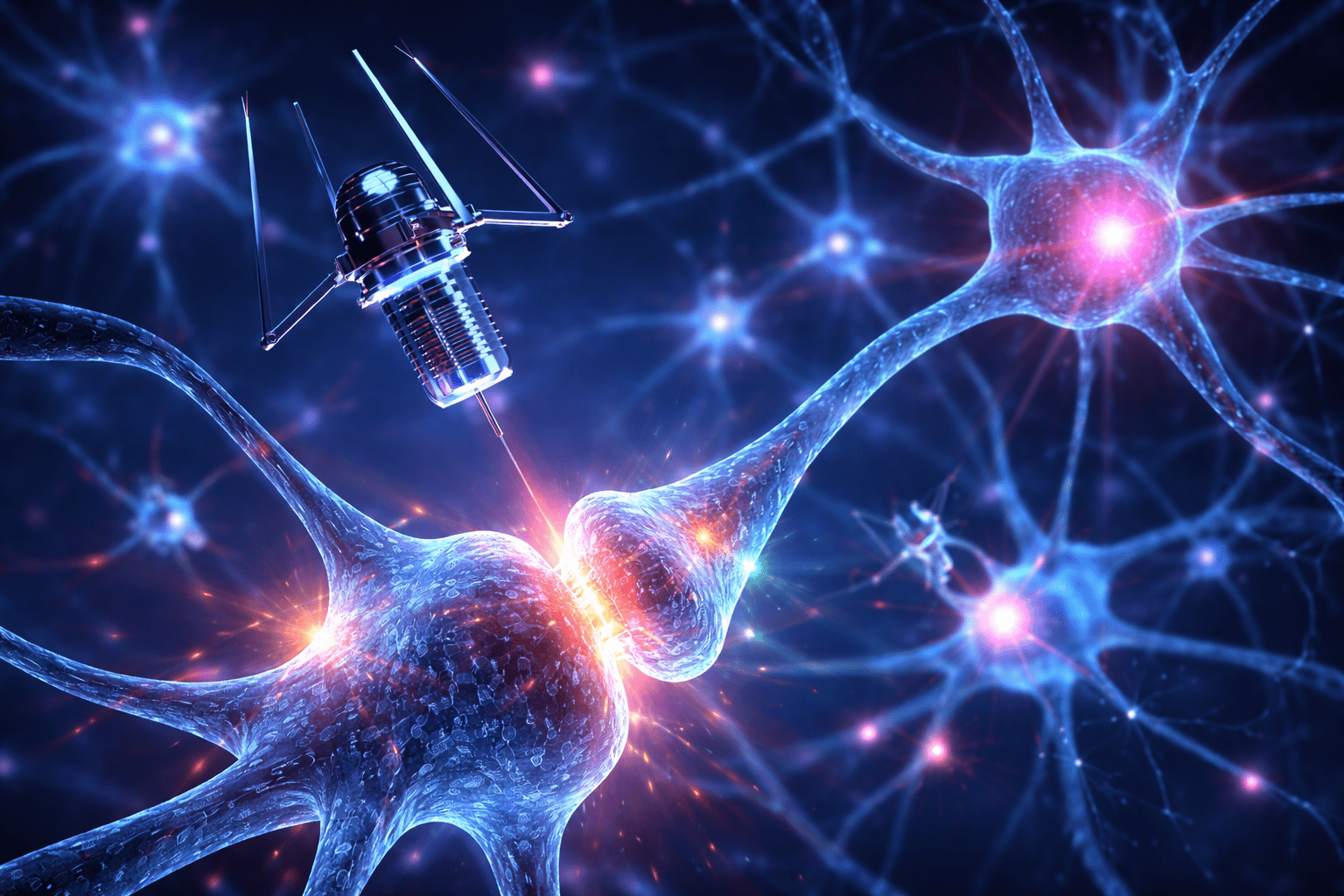
To overcome the traditional treatment methods, researchers have explored the promising technology of nanotechnology as nanomedicine. Nanoparticles have the unique property of being small, typically ranging from 1 to 100 nanometers, with a high surface area, and having the ability to easily cross the blood-brain barrier, and they effectively deliver the drugs to the affected area of the brain.
To target affected brain regions and increase the effectiveness of treatment while reducing the side effects. NPs’ surfaces can be easily modified by attaching diverse organic compounds, such as ligands and other agents, furthermore certain NPs hold the drugs and release them slowly over time on PD-effective surfaces known as nanocarriers, therefore providing the controlled and prolonged release of therapeutic agents. Furthermore, this focused drug administration enhances therapeutic bioavailability and minimizes the side effects. Overall, this method greatly improves the management of disease.
Nanocarriers being tiny, nanosized particles are used to carry and deliver the therapeutic drugs at the target site, that protects the therapeutic drugs from degradation and releases the drug slowly over time. There are several promising nanoparticle-based drug delivery approaches that help in the managing of Parkinson’s disease. (1)
- Lipid-based nanoparticles, including liposomes and solid lipid nanoparticles, are used to protect drugs from degradation and enhance the delivery of drugs from the bloodstream into the brain.
- Polymeric nanoparticles are minute particles that are made from biodegradable materials and are known for controlled and sustained drug release, reducing the dosing frequency.
- Metallic nanoparticles include gold and silver nanoparticles, which exhibit antioxidant and anti-inflammatory properties and can help reduce neurodegeneration.
- Carbon-based nanoparticles such as graphene and carbon nanotubes, which offer high surface area and potential neuroprotective impact.
Gene therapy and CRISPR integration: Emerging Therapeutic Strategies
Scientists are persistently exploring various ways to treat PD. There are numerous cutting-edge methods such as gene therapy and stem cell therapy, neuroprotective agents, and nanomedicine, which are aimed to target the root causes of neurodegeneration. These methods are currently in the early stages of clinical development. Stem cell therapy replaces the damaged and lost dopaminergic neurons and provides the potential to regenerate the dopamine levels in the brain.
However, gene therapy helps in the introduction of specific genes into the brain to enhance the synthesis of dopamine and protect neurons from degeneration. Current advancements in gene therapy include the integration of CRISPR/Cas9 technology. The technology enables the editing and repairing of defective genes, allowing precise genetic modification to target the root cause of Parkinson’s disease. (2)
Parallelly, neuroprotective agents such as antioxidants and anti-inflammatory drugs are explored to slow neuronal deterioration and minimize the disease progression. Additionally, nanomedicine has evolved as a highly promising approach by enhancing drug delivery across the blood-brain barrier and increasing the therapeutic efficacy. Together, these innovative strategies represent a transformative shift toward more targeted, effective, and personalized treatments for Parkinson’s disease.
Traditional Therapy vs Nanotechnology-Based Therapy in Parkinson’s Disease
| Feature | Conventional Treatments | Nanotechnology-Based Approach |
| Drug Delivery | Limited brain accesses due to blood-brain barrier | Efficient crossing of BBB using nanoparticles |
| Targeting | Non-specific (affects whole body) | Highly targeted to affected brain regions |
| Drug Release | Immediate, requires frequent dosing | Controlled & sustained release |
| Side Effects | High (e.g., dyskinesia, hallucinations) | Reduced due to targeted delivery |
| Drug Stability | Prone to degradation | Protected within nanocarriers |
| Treatment Outcome | Symptom management only | Potential for improved efficacy & precision |
| Technology Used | Levodopa, DBS | Nanotechnology, nanoparticles |
Conclusion: The article emphasizes on the basics of Parkinson’s disease, their pathophysiology, and current available treatment methods along with the limitations of the current drug used in treating Parkinson’s disease. Further, a deeper dive on the role of nanotechnology, nanoparticles, and nanomedicine in treating Parkinson’s disease and possible integration of the nanoparticles with other emerging technologies for the symptomatic management of PD. The emerging techniques like gene therapy and CRISPR/Cas9 for the possible treatment of PD are the future. Such investigation will pave the way for advanced technology and a new PD neurological care era.
Frequently Asked Questions (FAQs)
1.What is Parkinson’s disease?
Parkinson’s disease is a progressive neurodegenerative condition characterized by motor dysfunction, primarily resulting from the degeneration of dopaminergic neurons in the substantia nigra, leading to a significant decline in dopamine levels.
2. How are the current treatments limited?
Conventional pharmacological therapies, including Levodopa, primarily provide symptomatic relief but do not address the underlying neurodegeneration or halt disease progression.
3.How does nanotechnology contribute?
Nanotechnology offers advanced strategies for targeted drug delivery, enhancing the ability of therapeutic agents to cross the Blood–brain barrier and improving bioavailability within the central nervous system.
4. What are nanocarriers?
Nanocarriers are engineered nanoscale delivery systems designed to transport therapeutic compounds in a controlled and sustained manner, thereby increasing drug stability, reducing systemic toxicity, and enabling precise targeting of brain tissues.
5. What are potential future treatments?
Emerging therapeutic approaches, such as Gene therapy and CRISPR-Cas9, aim to address the root causes of the disease by modifying or correcting genetic and molecular pathways involved in neuronal degeneration.
References