

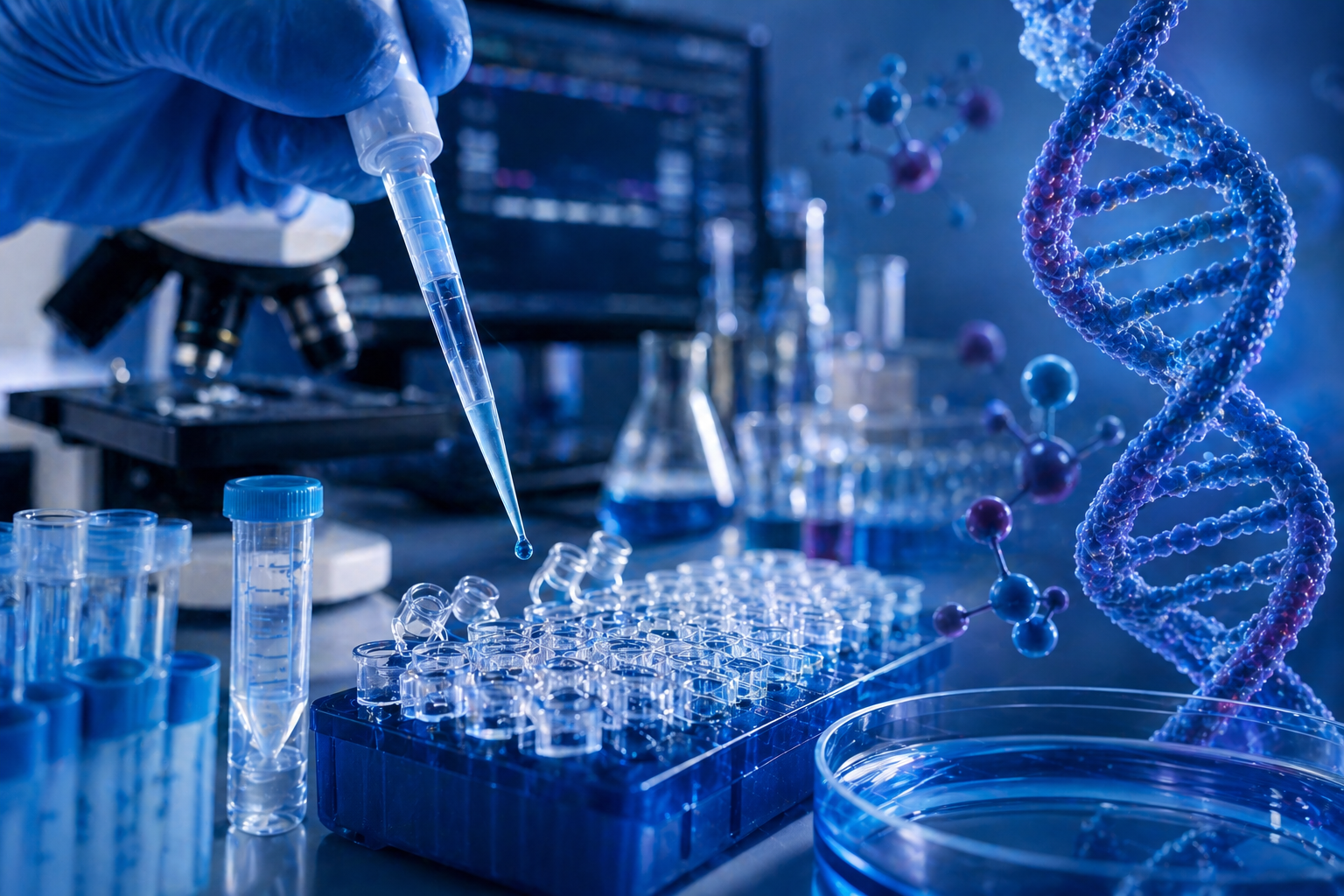

Researchers use molecular biology techniques to study how DNA, RNA and proteins work inside the cell and help in solving many biological and medical conditions, such as PCR-based detection to identify the presence of a pathogen, cancer research that focuses on identifying gene mutations, or in the development of genetically modified crops. These procedures are highly critical to perform, since a tiny change in volume and improper handling can cause contamination and lead to inconsistent and inaccurate results. Therefore, having the right tool that can fulfil the researcher’s requirements at every step is crucial, and that’s where Abdos’ high-quality consumables support.
Step-by-Step Workflow in Molecular Biology Research
- Sample Collection & Preparation
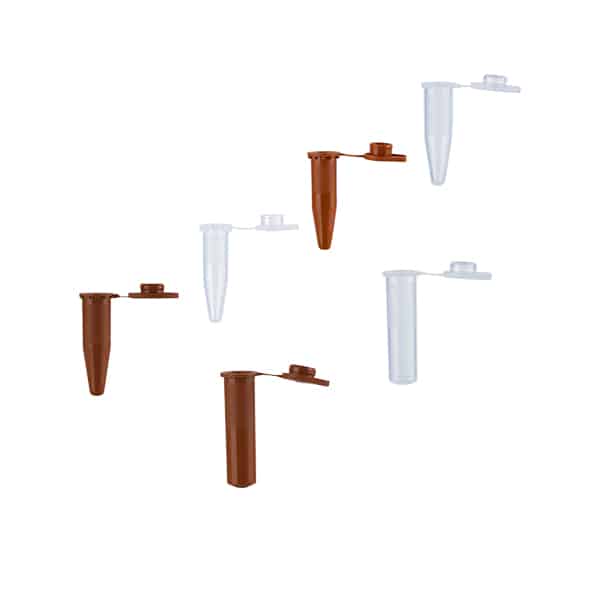
Depending on the quantity and experimental requirements, samples can be collected or prepared in different types of tubes like microcentrifuge tubes, centrifuge tubes, test tubes, and cryovials. Abdos microcentrifuge tubes are made from high-quality virgin polypropylene, providing a leak-proof seal. They are suitable for collecting small volumes of samples and used for the extraction of DNA, RNA, and proteins.
For larger volumes, Abdos 15 mL and 50 mL centrifuge tubes are ideal. These tubes are commonly used for collecting liquid samples, plant tissue sample preparations and are designed to withstand different cycles of centrifugation.
Abdos test tubes are generally used for temporarily hold samples during routine experiments. In some cases, user may need to store samples for longer periods or future analysis, where cryovials are used, as they are specifically designed for low-temperature storage.
After the collection of the sample, the sample must be kept under optimal conditions. Depending on the nature of the samples, they need to be stored at room temperature, freeze storage or in a deep freezer.
Abdos cryo vials and freezing tubes help in maintaining sample integrity for a longer period by maintaining the tubes at extremely low temperatures while preventing leakage and degradation. These tubes preserved the samples and delivered consistent results in future studies.
Measuring and transferring samples accurately is the most critical step during the liquid transfer. Even slight inaccuracies at any step can affect the entire experiment. Abdos offers elegant micropipette, one among the world’s lightest pipettes, provided with the compatible standard and filter tips, manufactured using diamond polish moulds, offering high clarity. Furthermore, Patented Pipette tip box i.e. Gen-2 racked pipette tips build using anti-warpage technology, offers strength & security in handling liquid samples, and are designed with consistent wall thickness for repetitive use in single and multichannel pipette, that ensure accurate and reproducible results.
- Nucleic Acid Extraction (DNA/RNA)
The basic step of molecular biology research is isolating the DNA or RNA from the cells. From cell lysis to washing off proteins and contaminants, the binding of nucleic acids using silica and magnetic beads, followed by washing of bound nucleic acid with buffers and then to the final step of elution, at every step of the isolation process, microcentrifuge tubes are used. While in plant extraction, centrifuge tubes are commonly used because the process often requires sufficient solvent to fully immerse the tissue and efficiently extract the genetic material.
- Reaction Setup & Amplification (PCR/qPCR)
Extracted DNA is then amplified to create millions of copies. The reaction set up involves multiple steps, including preparation of master mix, addition of the forward and reverse primers, aliquoting into PCR tubes or PCR plates & addition the template DNA/RNA.
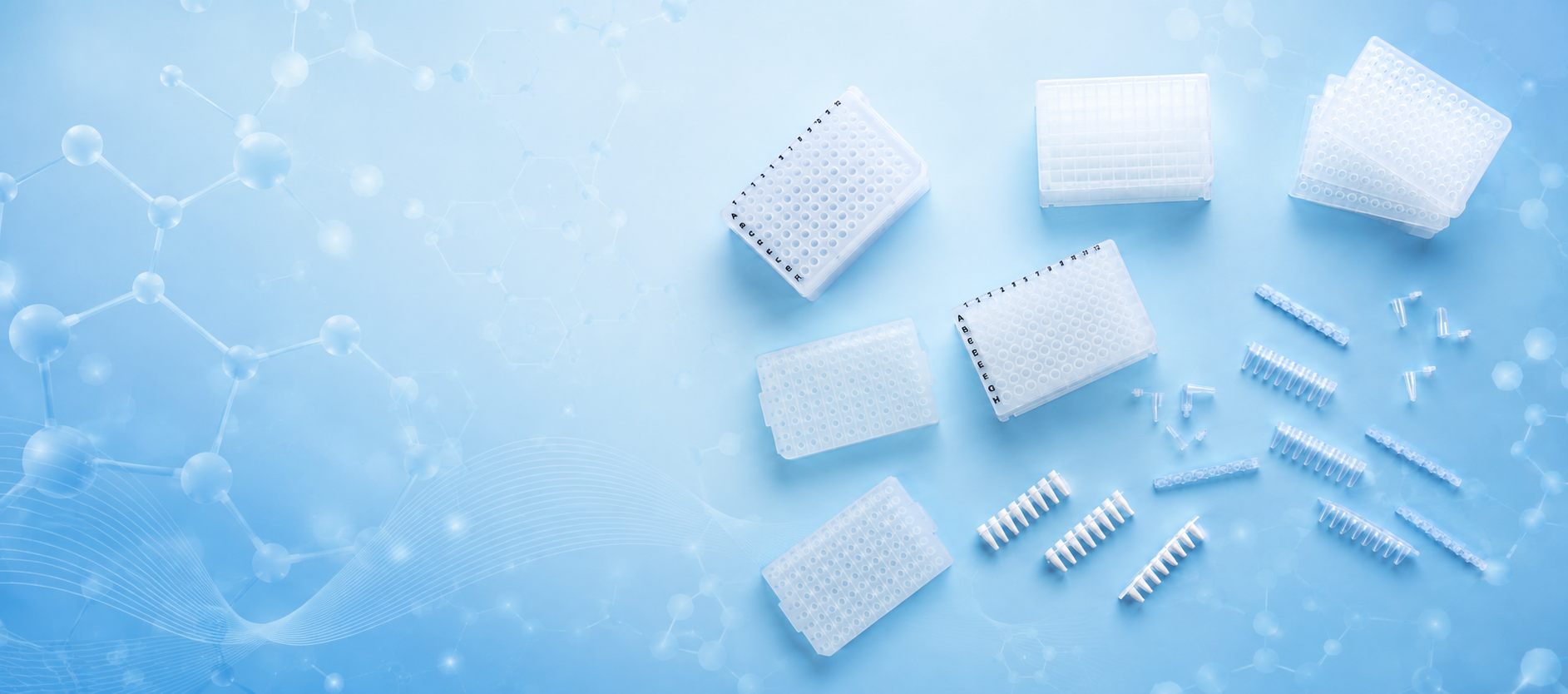
To prepare the reaction mixture, microcentrifuge tubes or high volume PCR tubes are used, while for amplification step theAbdos AmpQlear PCR tubes, AmpQlear 8 strip tubes are used to ensure reliable amplification. Abdos 96 & 384-wellPCR plates in both skirted and non-skirted formats are other options that are well-suited to run multiple samples at a time in high-throughput reactions. The plates are compatible with sealing films, which prevent evaporation and contamination during storage or incubation too.
PCR workup racks are designed to hold both skirted and non-skirted 96-well PCR plates, ensuring stability during setup and handling. Additionally, PCR workstation racks with lids are versatile platforms that accommodate 96-well plates, individual PCR tubes, and microcentrifuge tubes, helping maintain organisation, reduce contamination risk, and improve workflow efficiency during PCR preparation.
- Sealing & PCR Run
Seal the PCR Plates with Abdos sealing films and mats available in silicone, aluminium, and polyester to suit different plate formats and assay requirements. These sealing films prevent evaporation and contamination during thermal cycling.
After sealing, briefly spin the plates to collect the reaction mixture at the bottom of the wells and remove any air bubbles. Then load the PCR tubes or Plates into the thermal cycler. Maintaining uniformity at every step is key to reproducible results, as even minor inconsistencies can affect the amplification and lead to poor performance.
- Electrophoresis Application
After the amplification is complete, the generated data is analysed and used to determine amplified DNA presence, restricted digestions, RNA analysis or PCR amplified product detections. Abdos Horizontal electrophoresis system, along with Abdos Mini-moulded vertical electrophoresis, also known as CompactPage, designed to run all the routine gel runs, manual PAGE & SDS-PAGE applications and are a best fit for the routine molecular biology labs.
- Waste Management & Lab Safety
A safe lab is a productive lab. Using Abdos biohazard bags and autoclavable bags, dispose of all the used consumables and ensure proper disposal and sterilisation, maintaining a clean and compliant workspace.
Conclusion
Molecular biology research is a chain of critical steps, where each stage contributes to the outcome. The most demanding application of this workflow is PCR and molecular diagnostics. Quality of results matters at every step from sample collection to final amplification and any compromise along the way can affect the entire experiment. By choosing the right tools and maintaining a structured workflow, researchers can eliminate uncertainty and focus on discovery.
With Abdos @www.abdoslifesciences.com as your trusted partner, you are supported at every step ensuring precision, reliability, and confidence in every result.
Frequently asked questions (FAQ’S)
Q1. What is Molecular biology research?
Ans. The study of DNA, RNA and proteins, how they work and interact inside the cell.
Q2. Which product is frequently used while doing nucleic acid extraction?
Ans. Microcentrifuge tubes are used at every step of extraction.
Q3. When is the routine gel electrophoresis performed?
Ans. In the case of conventional PCR, to check if the targeted DNA is amplified.
Q4. Why is sealing PCR plates before thermal cycling necessary?
Ans. Sealing prevents two major risks, evaporation and cross-contamination between wells during thermal cycling.
Q5. What makes Abdos AmpQlear PCR tubes and plates suitable for amplification?
Ans. AmpQlear PCR tubes and plates feature a thin, uniform wall thickness that enables optimal heat transfer between all the wells.